Vynix plans, and how to pick the right one
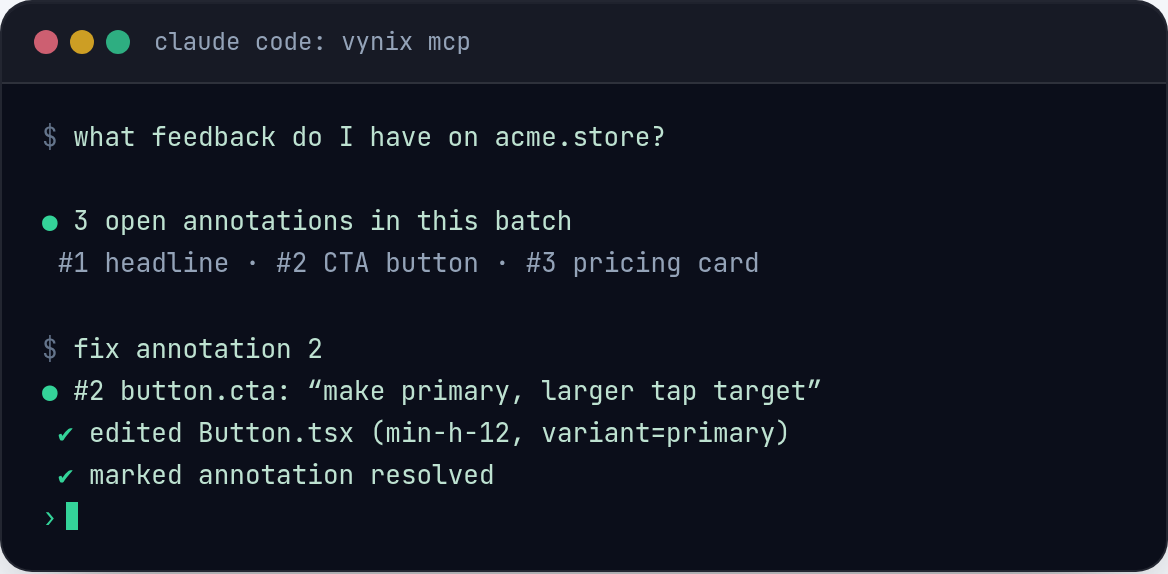
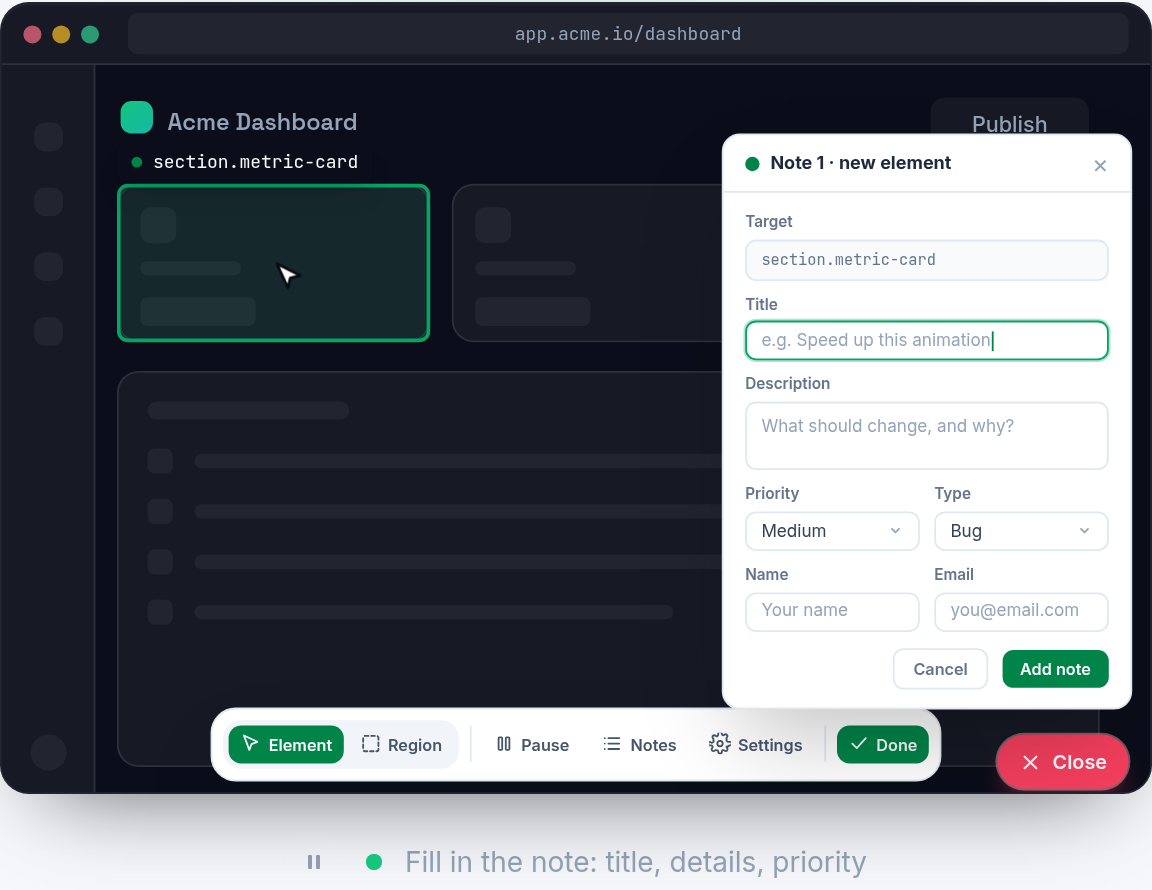
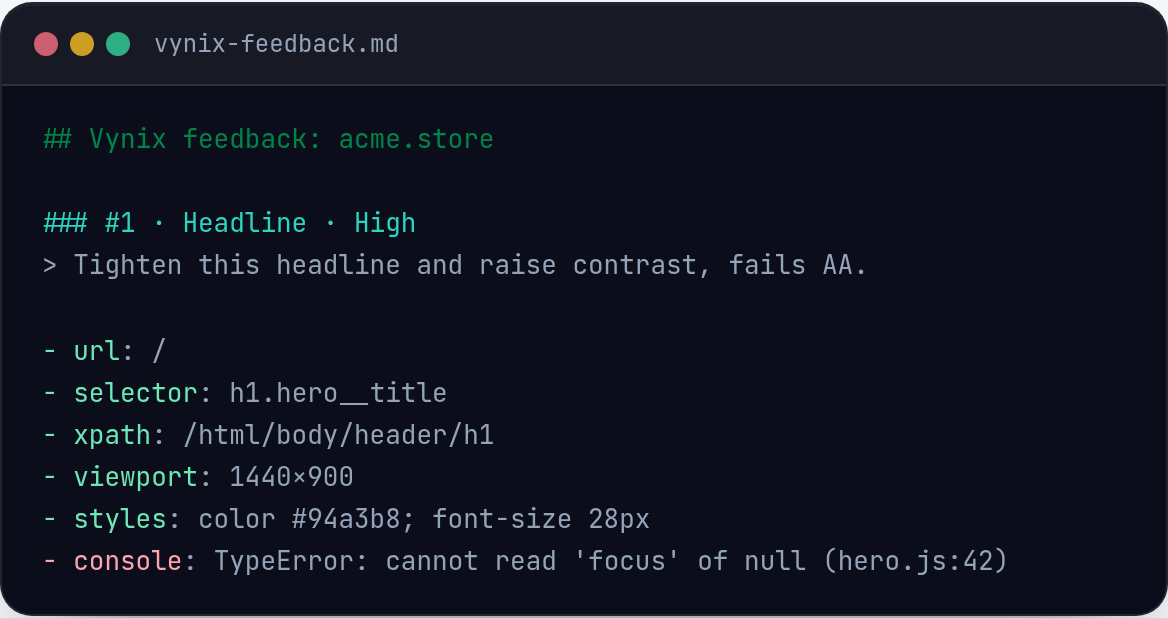
Vynix helps teams turn vague website feedback into developer-ready context. Instead of asking someone to describe a broken button or paste a console error, you can click the problem area and capture the element, screenshot, console, network context, and an AI diagnosis of the likely root cause.
What Vynix does before you compare plans
Before choosing a plan, it helps to be clear about the job Vynix is doing. Vynix is not just a screenshot tool and it is not a general project tracker. It is a website annotation and developer-context tool built for the moment when someone sees an issue on a site and needs to hand it to a developer or coding agent with enough detail to act on it.
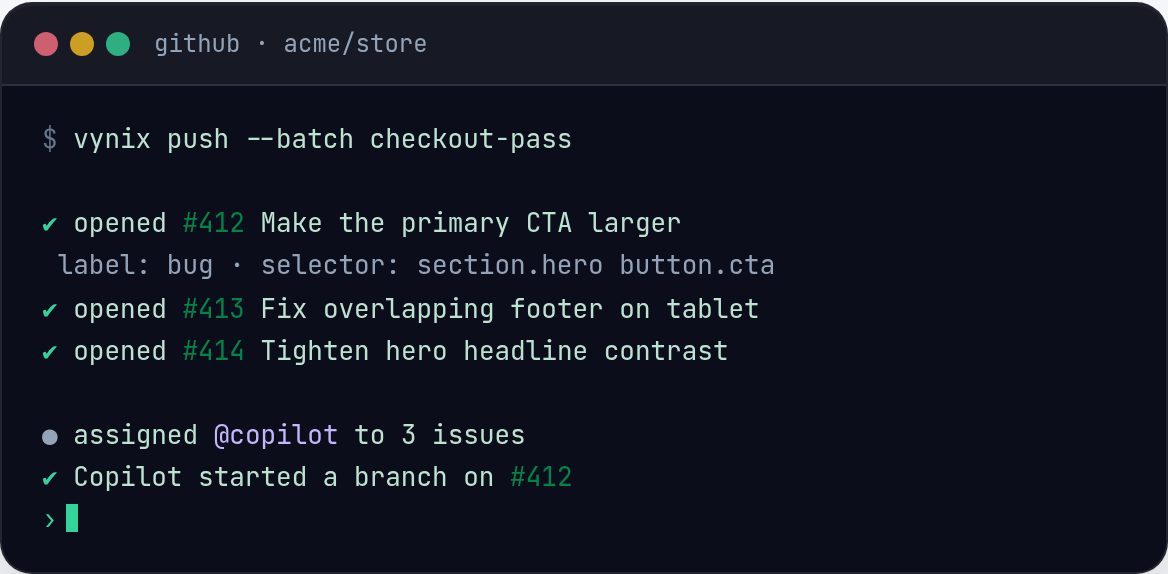
The workflow is simple. You add a lightweight widget to a site, click on the part of the page that is wrong, and Vynix captures useful context around that click. That can include the selected element, a screenshot, console information, network context, and an AI diagnosis that points to the likely root cause. From there, you can copy a prompt that is ready for implementation work or open a GitHub issue and assign it to a coding agent.
That matters because many bug reports fail before engineering ever sees them. A report like "the checkout page is broken" usually leads to follow-up questions. Which browser? Which field? What request failed? Was there a console error? Vynix is designed to collect that context when the issue is observed, instead of asking someone to recreate it later.
The free plan is for proving the workflow
Vynix has a free plan. Treat it as the place to test whether this style of feedback capture fits the way you build and fix websites. If you are an individual developer, founder, product manager, designer, or QA tester, the free plan is a practical way to try the widget on a real site and see what kind of context Vynix collects.
The free plan is especially useful when the alternative is screenshots in chat, vague ticket descriptions, or long back-and-forth threads. Even a small number of captured issues can show whether Vynix saves time in your process. The question is not only "Can I report a bug?" The better question is "Can a developer understand and start fixing this without asking for the same details again?"
If your team is still evaluating Vynix, keep the test concrete. Pick one website, define one feedback path, and compare a Vynix report with the way you would normally report the same issue.
- Use the free plan to test Vynix on a real page, not only a demo page.
- Capture a few common issue types, such as broken UI states, failed requests, or confusing form behavior.
- Check whether the copied prompt or GitHub issue contains enough context for a developer or coding agent to begin work.
- Ask the person receiving the report whether it reduced clarification questions.
Paid plans are for regular use and higher-volume work
Paid Vynix plans add more beyond the free plan. The exact details can change, so this article will not list prices, credit counts, or hard limits. For the current plan table, go to vynix.in/pricing.
At a high level, paid plans make sense when Vynix moves from experiment to normal workflow. If your team is repeatedly reviewing staging builds, triaging production bugs, routing issues into GitHub, or preparing prompts for coding agents, you will likely want the added room that paid plans provide. The free plan is a good starting point, but regular feedback loops usually need fewer interruptions and more capacity.
A paid plan is also easier to justify when Vynix replaces fragmented work. If a single issue currently requires a screenshot tool, browser devtools notes, a Slack thread, a copied stack trace, and a separate ticket, then the cost comparison should include the time spent stitching that context together. The value is not only in capturing information. It is in preserving the connection between what the user clicked, what the browser saw, and what the developer needs next.
- Choose a paid plan when Vynix is part of your weekly or daily bug reporting flow.
- Move to a paid plan when several people need to capture or act on website issues.
- Consider paid plans when you want fewer workflow limits during QA, launch checks, or active development.
- Check vynix.in/pricing before deciding, because current plan details may change.
Pick based on how bugs reach engineering
The right Vynix plan depends less on company size and more on the shape of your feedback loop. A solo developer fixing a client site has a different need from a product team reviewing a new onboarding flow. A QA person testing a staging branch has a different need from a founder collecting customer feedback on a production site.
Start by mapping how a website issue becomes engineering work. Who notices the problem? Where do they report it? Who decides whether it matters? Who writes the task? Who fixes it? Vynix sits near the beginning of that chain, where the quality of the first report affects every step after it.
For occasional reporting, the free plan may be enough while you learn. For repeatable team workflows, paid plans are usually a better fit because the tool becomes part of how work moves from observation to fix. If GitHub is already where your engineering work lands, the ability to open a GitHub issue from captured context is a key part of the evaluation. If you use coding agents, the ready-to-build prompt is also worth testing with the kinds of bugs you actually fix.
Common plan-fit examples
A few examples can make the choice easier. These are not strict rules, and they do not replace the current pricing page. They are practical ways to think about when the free plan is enough and when a paid plan is likely to save more time.
For a solo builder, the free plan is a sensible first step. Install the widget on a side project, capture issues during your own testing, and see whether the AI diagnosis and captured browser context help you write better implementation prompts. If Vynix becomes part of every release check, look at the paid plans.
For an agency, the decision often depends on how much feedback comes from clients and internal reviewers. If clients send screenshots with unclear notes like "this section looks wrong", Vynix can reduce translation work. A paid plan may make sense once multiple projects or frequent review rounds are involved.
For a product team, Vynix can help product, design, QA, and engineering talk about the same page state. A report tied to an element, screenshot, console, and network context is usually easier to triage than a written description alone. If your team already opens GitHub issues for bugs, test whether Vynix makes those issues more complete at creation time.
- Solo developer: start free, then upgrade if Vynix becomes part of routine testing.
- Founder or PM: use Vynix to turn observations into developer-ready reports instead of long notes.
- Agency: consider paid plans when client review cycles create repeated website feedback.
- Product team: consider paid plans when several roles need to report and route issues into engineering.
A simple checklist before you choose
Plan selection is easier when you evaluate Vynix with real work instead of guessing. Pick one page that often creates feedback, install the widget, and capture several issues. Include at least one UI problem, one case where browser context matters, and one issue you would normally send to GitHub or a coding agent.
Then compare the result with your current process. Did the report include the element that was clicked? Did the screenshot make the problem obvious? Did console or network context explain something that would otherwise require a developer to reproduce the issue? Was the AI diagnosis useful as a starting point, even if a developer still needed to verify it? Did the copied prompt or GitHub issue reduce manual writing?
After that test, the plan choice is usually clear. Stay on the free plan if your usage is light and the current limits fit. Choose a paid plan if Vynix is becoming part of your normal debugging, QA, or handoff process. For exact pricing, limits, and current plan names, check vynix.in/pricing before you decide.
- How often do you capture website issues?
- How many people need to report or act on those issues?
- Do issues usually need console or network context to be understood?
- Do you want reports to become GitHub issues or coding-agent prompts?
- Would fewer clarification messages save meaningful time?
- Use the free plan to test Vynix with real website issues and see whether it improves developer handoff.
- Paid plans are best when Vynix becomes a regular part of debugging, QA, GitHub issue creation, or coding-agent workflows.
- Do not rely on old pricing details. Visit vynix.in/pricing for current plan information before choosing.
Frequently asked questions
Does Vynix have a free plan?
Yes. Vynix has a free plan that is useful for trying the widget, capturing real website issues, and deciding whether the workflow fits your team.
Where can I find current Vynix prices and limits?
Check vynix.in/pricing for current pricing, plan names, limits, and any included usage details. This article avoids exact numbers because they can change.
When should I move from free to a paid Vynix plan?
Move to a paid plan when Vynix becomes part of regular work, such as QA passes, launch checks, production bug reports, GitHub issue creation, or preparing prompts for coding agents.
Install the widget with one script tag, point at a bug, and hand the fix to your coding agent.
Get started free