Feedback loop
A feedback loop is a process where the output of a system is observed, evaluated, and used as input for the next change. In software, it describes how teams learn from users, tests, metrics, logs, and bugs, then adjust the product or code accordingly.
What feedback loop means
A feedback loop connects action to learning. A team ships a change, observes what happens, interprets the result, and uses that information to decide what to do next. The loop can be technical, such as a test suite failing after a code change, or human, such as a customer reporting that a checkout button does not work on mobile.
In developer work, feedback loops appear everywhere: compile errors, code review comments, CI results, production metrics, error logs, user interviews, support tickets, and bug reports. The value is not just in receiving feedback, but in closing the loop by acting on it and checking whether the action solved the problem.
Why feedback loops matter
Short feedback loops reduce the cost of mistakes. If a developer sees a failing unit test seconds after making a change, the cause is usually fresh in memory and easy to fix. If the same issue is discovered weeks later in production, the team may need to reconstruct context, identify affected users, inspect logs, and coordinate a release under pressure.
Good feedback loops also improve product decisions. Usage analytics can show that users abandon a setup flow, but qualitative feedback can explain why. Error monitoring can show that a browser-specific issue is happening often, while a detailed bug report can reveal the exact element, action, and environment involved. Together, these signals help teams prioritize fixes based on impact rather than guesswork.
Examples and common mistakes
A simple example is a pull request workflow. A developer changes code, CI runs tests, reviewers leave comments, the developer updates the branch, and the checks run again. Each cycle tightens the change until it is safe to merge. Another example is feature experimentation: release a small change, measure behavior, gather user feedback, and refine or roll back based on evidence.
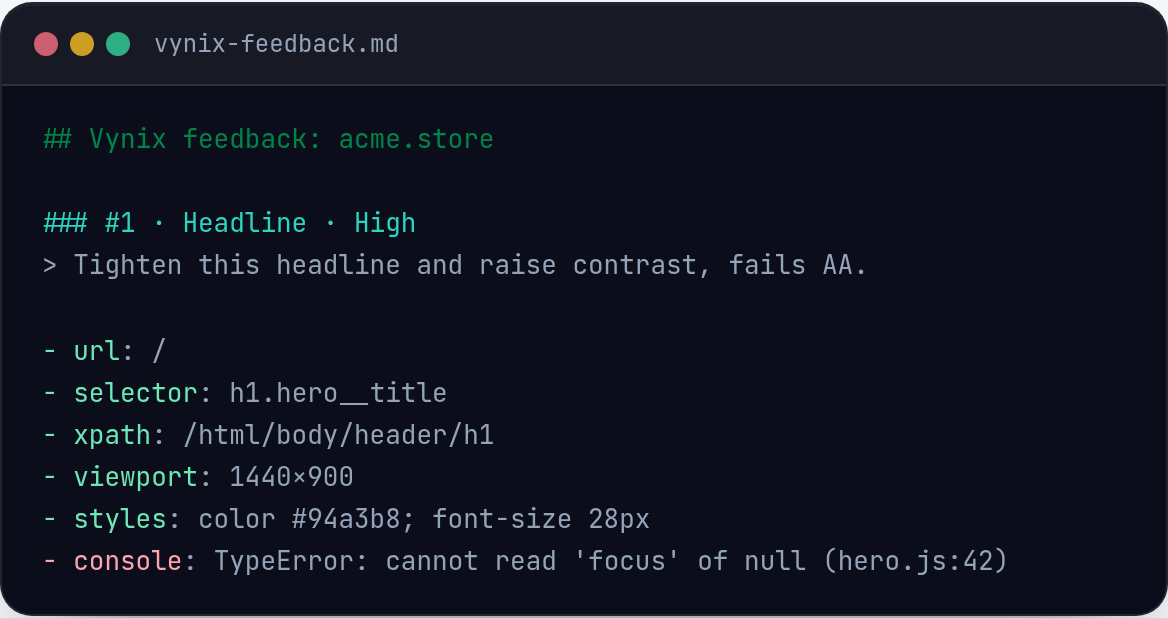
A common mistake is treating feedback as a one-way collection process. A backlog full of reports is not a functioning feedback loop if no one triages, fixes, or follows up. Another mistake is relying on feedback that is too vague, such as "the page is broken" with no screenshot, browser details, console errors, or reproduction steps. Weak feedback forces developers to spend time discovering context instead of fixing the problem.
How it relates to feedback and fixing bugs
Bug fixing is one of the clearest places to see a feedback loop. Someone observes incorrect behavior, captures evidence, a developer investigates, a fix is shipped, and the original issue is retested. The loop is closed only when the team verifies that the fix works and, ideally, adds a test or monitoring signal to catch regressions later.
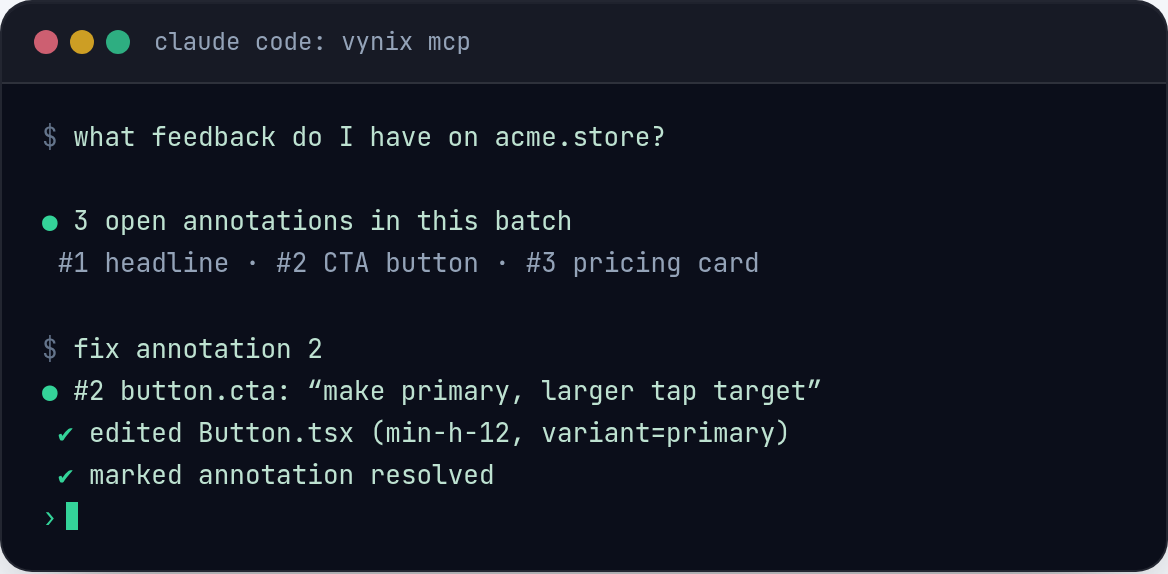
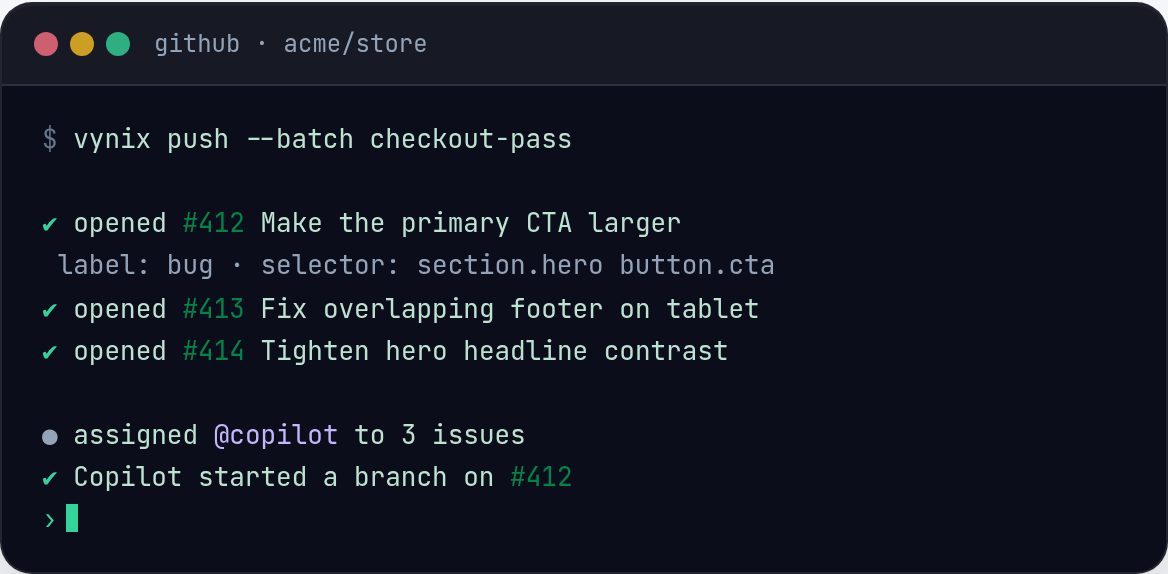
Tools can make this loop faster by preserving context at the moment feedback is given. Vynix, for example, lets someone click on a broken part of a website and captures the element, screenshot, console and network context, plus an AI diagnosis, then turns it into a prompt or GitHub issue. That shortens the path from "something is wrong" to an actionable developer task.
Frequently asked questions
What is the difference between feedback and a feedback loop?
Feedback is the information received, such as a bug report, metric, review comment, or user complaint. A feedback loop is the full cycle of receiving that information, acting on it, and checking whether the action improved the system.
What makes a feedback loop effective in software development?
An effective feedback loop is fast, specific, and actionable. It gives developers enough context to understand the issue, connects to a clear next step, and includes verification so the team knows whether the change actually fixed the problem.
Vynix captures the context that turns a vague report into a clear fix.
Try Vynix free