AI coding agent
An AI coding agent is an AI-powered software development tool that can take a task, inspect a codebase, make code changes, run commands or tests, and produce a proposed fix. Unlike a basic code autocomplete tool, it operates across a workflow, often planning, editing multiple files, validating results, and opening a pull request or issue update.
What an AI coding agent means
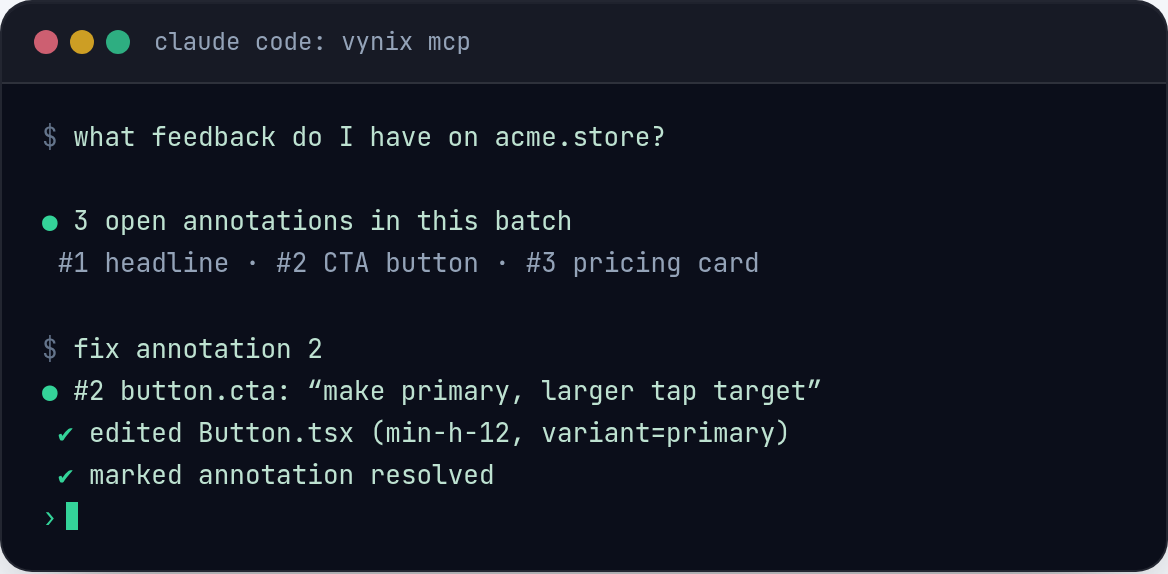
An AI coding agent is a development assistant that acts on a goal rather than only responding with snippets. A developer might say, "Fix the checkout button on mobile Safari," and the agent can search the repository, identify likely files, change UI logic or CSS, run tests, and summarize what it did. Depending on the platform, the agent may work inside an IDE, a terminal, a hosted sandbox, or a GitHub workflow.
The key difference between an AI coding agent and a chatbot is agency. A chatbot can explain how to fix a bug. An agent can often attempt the fix directly, using tools such as file editing, shell commands, dependency inspection, test runners, linters, and version control. Human review is still important, but the agent can remove much of the mechanical work between a bug report and a proposed patch.
Why AI coding agents matter
AI coding agents matter because many engineering tasks are not blocked by deep architecture decisions, but by context gathering and repetitive implementation. Small bugs, UI inconsistencies, dependency updates, test failures, and refactors can take longer to describe, reproduce, and locate than to fix. A coding agent can compress that loop by turning a well-scoped task into a draft change.
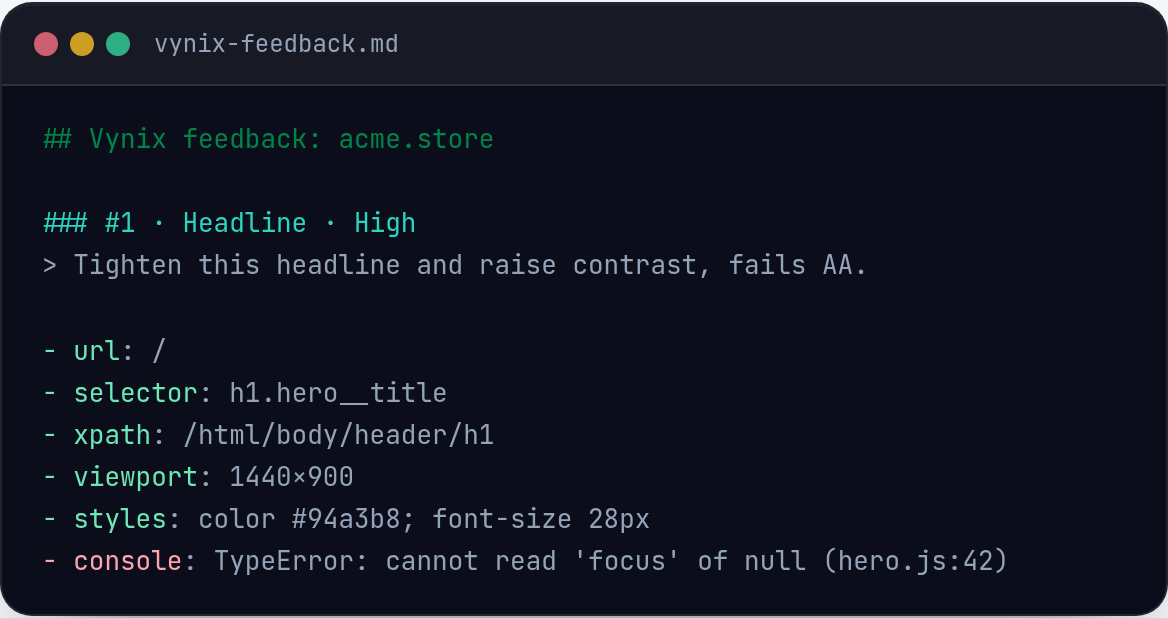
They are especially useful when the task includes enough context: expected behavior, actual behavior, reproduction steps, environment details, relevant screenshots, console errors, network failures, and links to the affected route or component. With that context, the agent is less likely to guess and more likely to make a targeted change. This makes the quality of the prompt or issue description a major factor in the quality of the output.
Common mistakes and practical examples
A common mistake is treating an AI coding agent like an autonomous senior engineer that needs no supervision. Agents can misunderstand product intent, overfit to a failing test, introduce broad changes, or miss edge cases. They should usually work from small, specific tasks with clear acceptance criteria, and their output should be reviewed like any other contribution.
Good tasks for an AI coding agent include "Add an empty state to the notifications panel," "Fix the API error handling when a 401 response is returned," or "Update this component to use the shared Button component without changing behavior." Poor tasks are vague, such as "Make the dashboard better" or "Fix the app." The more precise the scope, the easier it is for the agent to inspect, edit, and validate the right code.
How it relates to feedback and fixing bugs
AI coding agents become much more effective when connected to high-quality feedback. Bug reports often lose the details that matter: which DOM element failed, what the user clicked, what the console logged, which network request failed, and what the page looked like at the time. Without that information, an agent may spend its effort reconstructing the problem instead of fixing it.
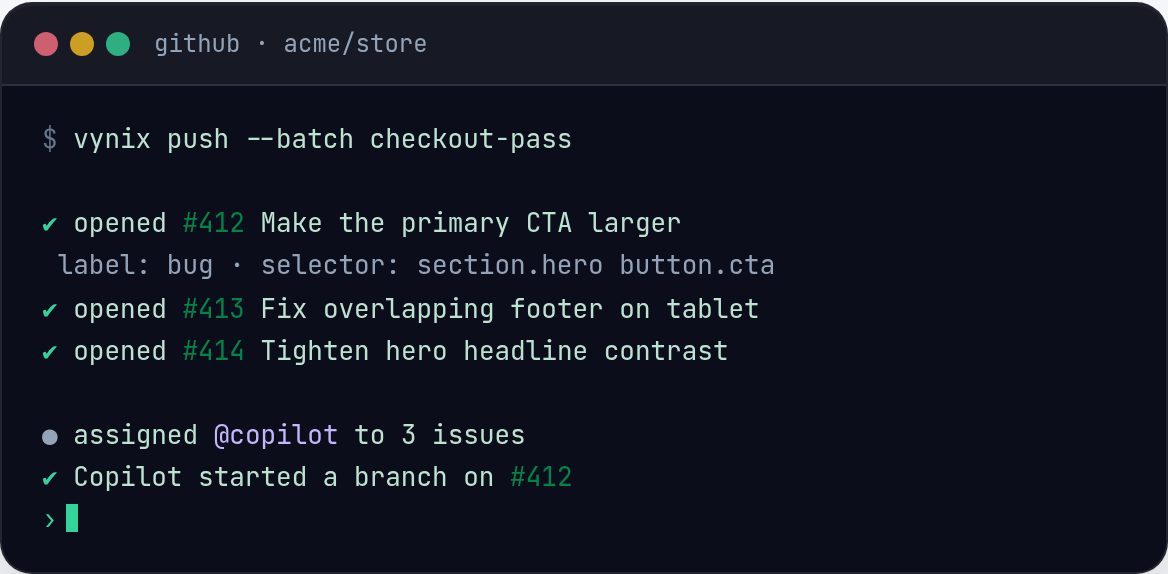
This is where tools like Vynix fit naturally into the workflow. Vynix is a website annotation and developer-context tool: you drop a lightweight widget on a site, click what is wrong, and it captures the element, screenshot, console and network context, plus an AI diagnosis of the likely root cause. From there, a team can copy a ready-to-build prompt or open a GitHub issue and assign it to a coding agent. The result is a cleaner handoff from user feedback to actionable engineering work.
Frequently asked questions
Is an AI coding agent the same as GitHub Copilot or code autocomplete?
Not exactly. Autocomplete suggests code while a developer is typing. An AI coding agent usually handles a larger task loop: it reads context, plans changes, edits files, runs checks, and may prepare a pull request or issue update. Some products include both autocomplete and agentic workflows.
Can an AI coding agent fix bugs without a developer?
It can often produce a useful draft fix, especially for well-scoped bugs with strong context, but it should not be treated as infallible. A developer should review the diff, run relevant tests, check product behavior, and confirm that the change matches the intended user experience.
Vynix captures the context that turns a vague report into a clear fix.
Try Vynix free