Vynix for ecommerce teams
Vynix helps ecommerce teams keep product pages, carts, checkout flows, and promotions moving without losing bug context. Add the widget, click on the issue, and hand developers the details they need to reproduce and fix it.
The problem
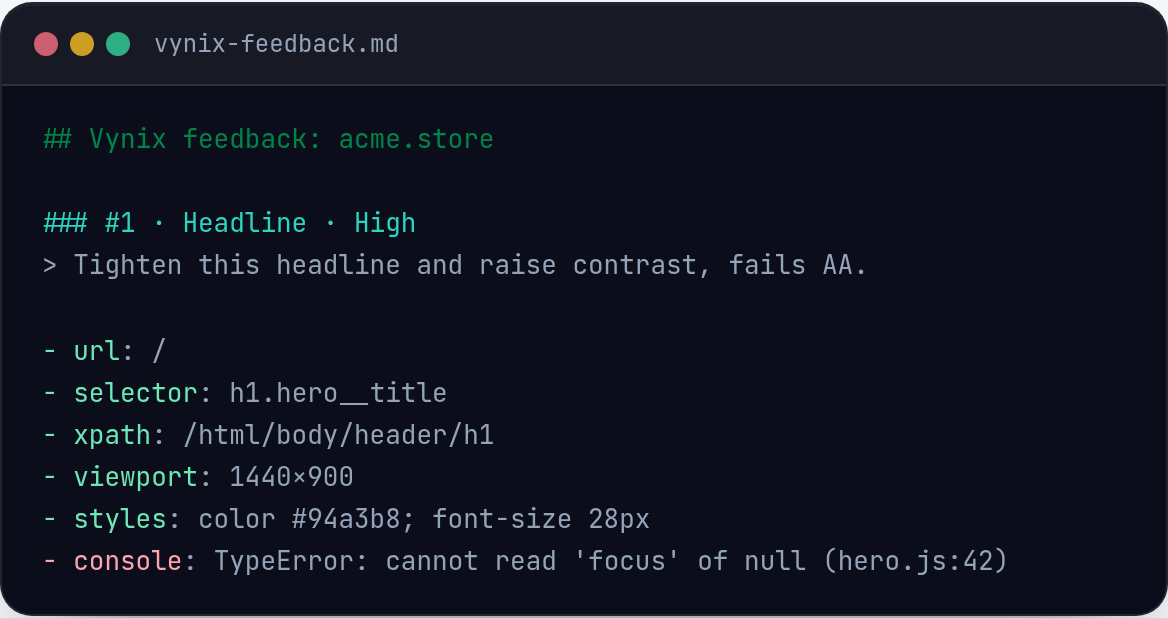
Ecommerce teams catch storefront issues in real time, but bug reports often arrive as vague screenshots, long Slack threads, or notes like "button broken." Developers then spend time asking for browser details, console errors, failed requests, and the exact element that failed. During launches, sale events, and checkout updates, that back-and-forth can slow down fixes when speed matters.
Report storefront issues from the page itself
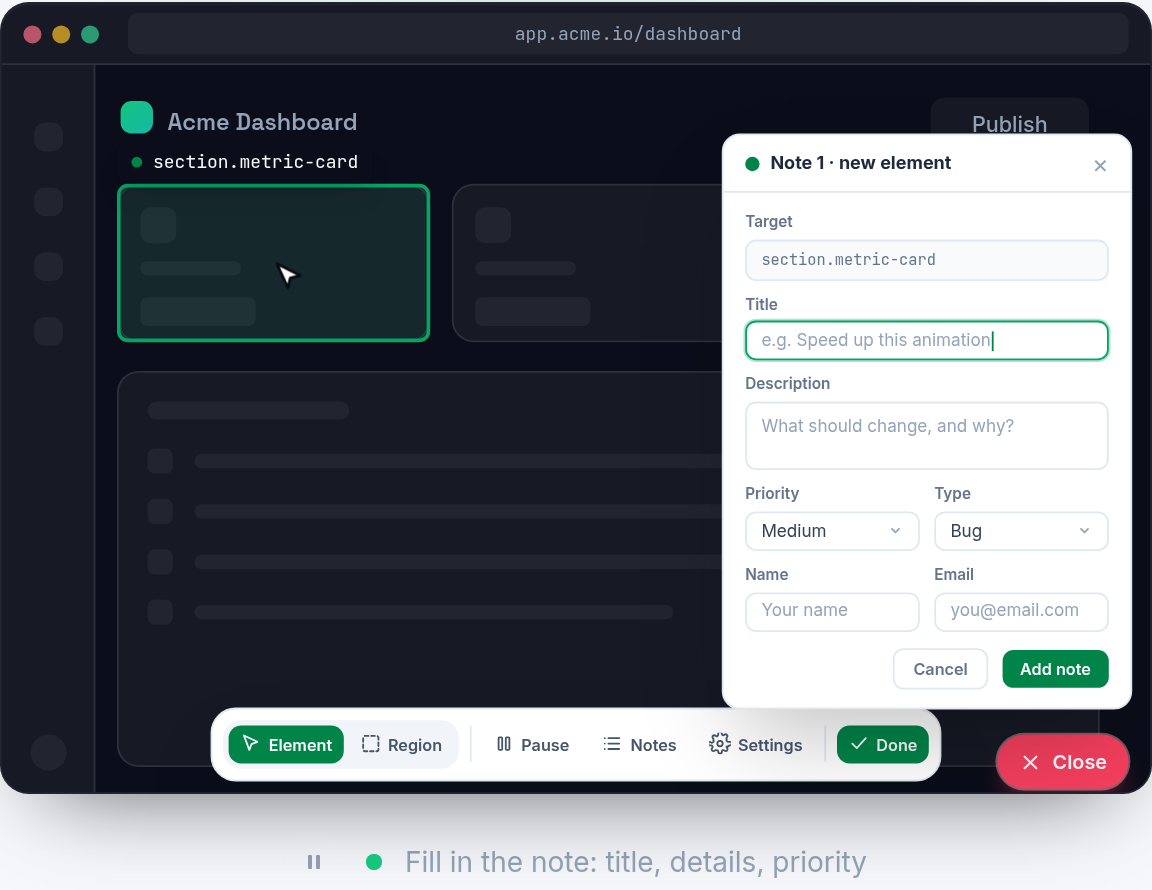
With click-to-annotate, merchandisers, QA, support, and growth teams can flag the exact part of a page that looks wrong or behaves incorrectly. Vynix captures the selected element and a screenshot so the report starts with the actual storefront state, not a description from memory.
Use it on product detail pages, collection pages, cart, checkout, promo banners, navigation, account pages, or any other page where a small bug can affect revenue or customer trust.
Give developers the context they usually have to ask for
Vynix automatically collects developer context around the issue, including console and network context. That gives engineering a clearer starting point for problems like broken scripts, failed API calls, styling regressions, tracking issues, or interactive elements that do not respond.
The AI root-cause diagnosis helps summarize what may be wrong, so the team can move from report to investigation faster. It does not replace developer review, but it makes the first pass more useful.
Move from review to build work without retyping everything
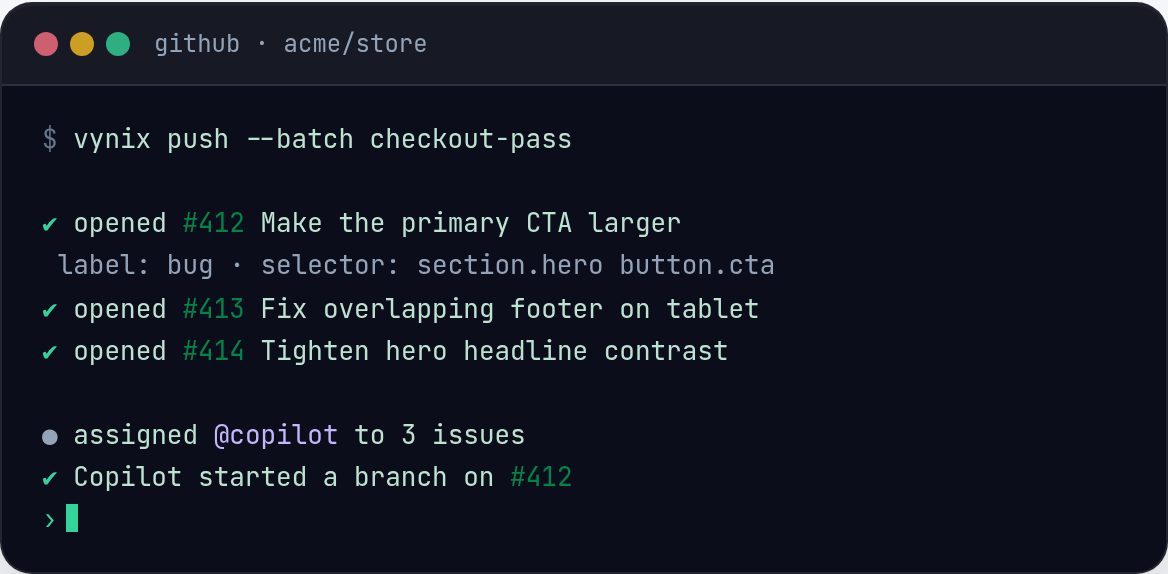
After an issue is captured, you can copy a ready-to-build prompt or open a GitHub issue and assign it to a coding agent. The report carries the page context with it, so the handoff is more structured than a screenshot and a message.
Review rounds, projects, roles, and sharing help ecommerce teams keep feedback organized across site updates, campaign QA, theme changes, and release checks.
What you get
- Click-to-annotate any page, so ecommerce teammates can flag the exact product image, price block, form field, button, or banner that needs attention.
- Automatic developer context captures screenshots plus console and network details, reducing the back-and-forth needed to reproduce storefront bugs.
- AI root-cause diagnosis gives developers a starting point for likely causes, while leaving the final fix and review in their hands.
- GitHub issue creation and coding agent handoff turn a storefront annotation into build work without rewriting the report.
- Projects, roles, sharing, and review rounds keep QA feedback organized across launches, promotions, and ongoing storefront maintenance.
Frequently asked questions
Can non-technical ecommerce teammates use Vynix?
Yes. They can click on the part of the site that is wrong and add the annotation. Vynix captures the technical context in the background for developers.
What context does Vynix capture with a storefront bug?
Vynix captures the selected element, a screenshot, console and network context, and an AI diagnosis of the likely root cause.
Can Vynix connect a bug report to development work?
Yes. From a captured issue, you can copy a ready-to-build prompt or open a GitHub issue and assign it to a coding agent.
One script tag, a free plan, and your first report in a minute.
Get started free