Trello vs Vynix
Trello and Vynix help teams coordinate work, but they are built for different parts of the workflow. Trello is a general project management tool centered on boards, lists, and cards, while Vynix focuses on turning website issues into developer-ready context.
At a glance
| Capability | Vynix | Trello | Notes |
|---|---|---|---|
| Kanban project boards | Partial | Yes | Trello is centered on boards, lists, and cards, while Vynix is focused on website issue workflows. |
| Click-to-annotate website feedback | Yes | Partial | Vynix provides direct page annotation. In Trello, feedback is usually added manually to cards or via integrations. |
| Automatic screenshot and element capture | Yes | Partial | Vynix captures page context during annotation. Trello can store screenshots, but capture methods vary. |
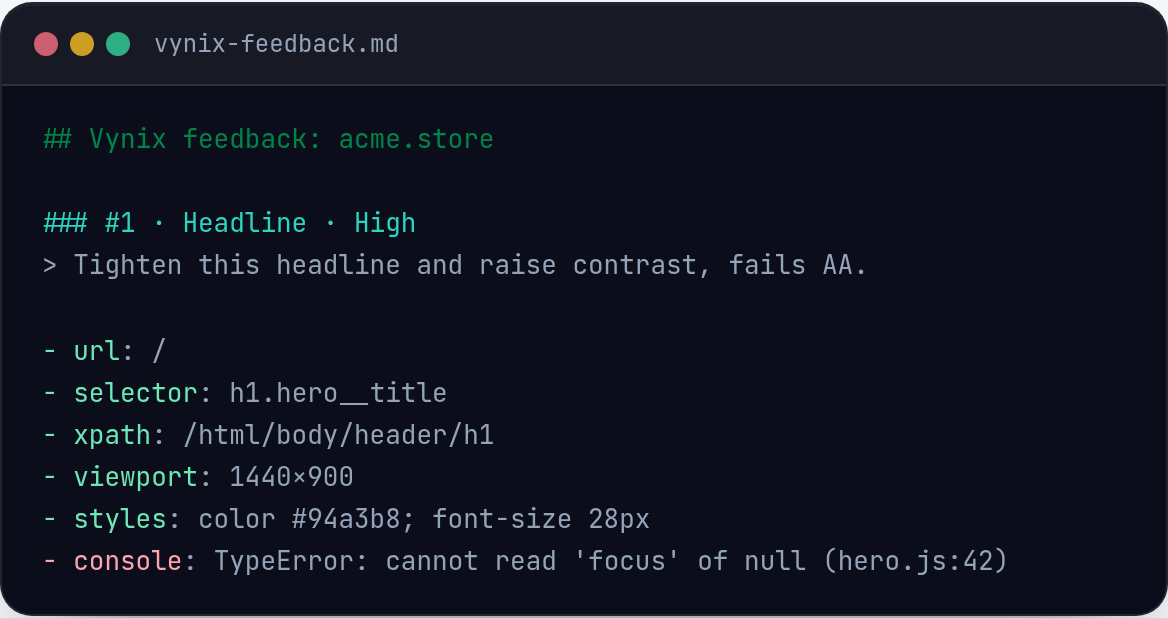
| Console and network context | Yes | Varies | Vynix is designed to collect developer context. Trello may receive this through manual entry or connected tools. |
| AI root-cause diagnosis | Yes | Varies | Vynix includes AI diagnosis for reported website issues. Trello AI-related capabilities depend on plan and setup. |
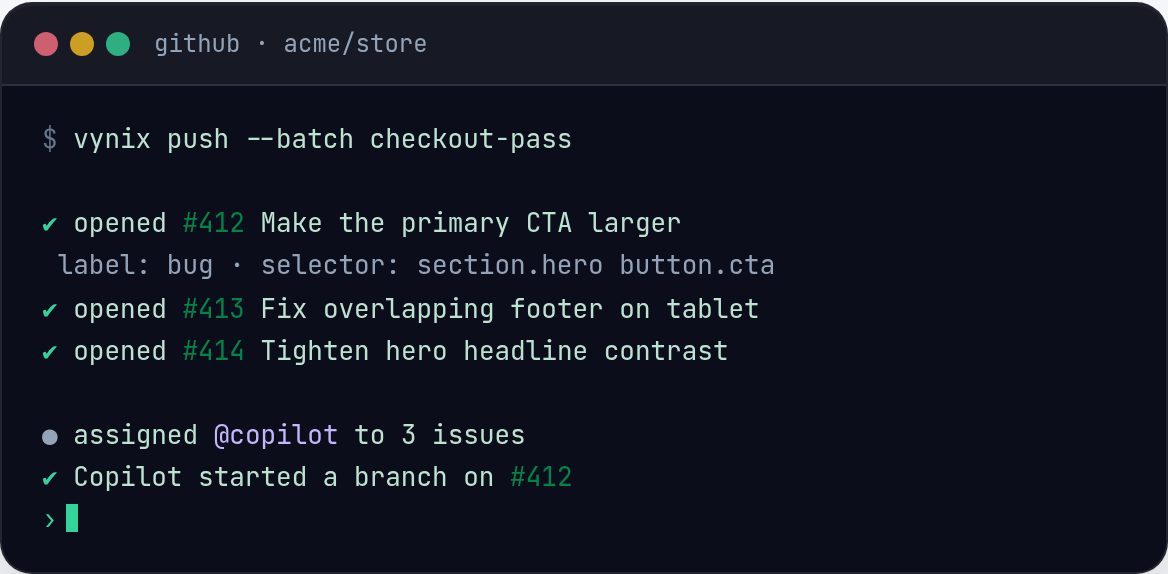
| GitHub issue handoff | Yes | Varies | Vynix supports opening GitHub issues from captured feedback. Trello can connect with GitHub depending on integration setup. |
| Coding agent handoff | Yes | Varies | Vynix supports assigning work to a coding agent. Trello usage with coding agents depends on external tools and workflow. |
| Review rounds, roles, and sharing | Yes | Partial | Vynix includes review-focused collaboration. Trello supports collaboration broadly through boards, members, permissions, and comments. |
Core focus
Trello is best known for visual kanban boards that help teams organize tasks, projects, and workflows. It can be adapted to many use cases, from content calendars to product backlogs.
Vynix is built for teams working on websites and web apps. Instead of starting with a blank task card, a user clicks on the broken or confusing part of a page and Vynix captures the surrounding technical context.
Capturing website issues
In Trello, website feedback is usually described manually in a card, often with screenshots, links, comments, or attachments added by the reporter. That can work well, but the quality of the ticket depends on what the reporter remembers to include.
Vynix is designed to capture the page element, screenshot, console details, network context, and other developer context at the moment the issue is reported. This can reduce back-and-forth between non-technical reviewers and engineers.
Developer handoff
Trello can be part of an engineering workflow, especially when teams use integrations, labels, checklists, and automation. The implementation details depend on how a team configures its boards and connected tools.
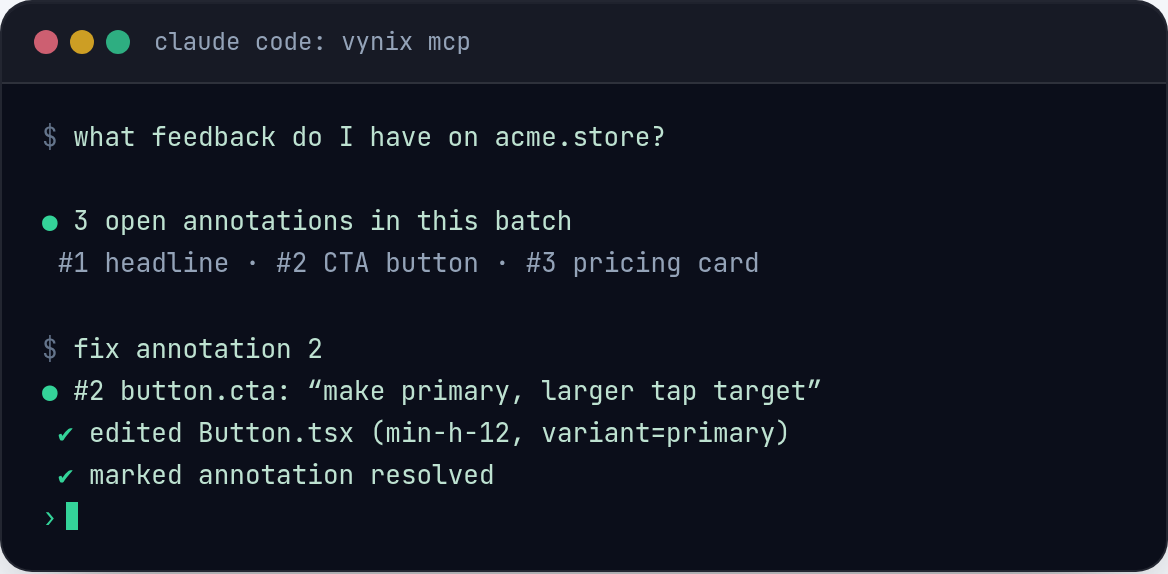
Vynix focuses more directly on developer handoff. It can generate an AI diagnosis of the likely root cause, provide a ready-to-build prompt, and support opening a GitHub issue that can be assigned to a coding agent.
Review cycles and team collaboration
Both tools can support collaboration, but at different levels of specificity. Trello is broad and flexible, while Vynix is more specialized for review rounds, website QA, and sharing page-specific feedback with roles and project structure.
The right choice depends on whether the team needs a general work management board or a purpose-built path from visual website feedback to engineering action.
When Trello fits
Trello fits when you need flexible kanban boards to organize general tasks, projects, and team workflows.
When Vynix fits
Vynix fits when you need to report website issues with captured developer context and hand them off to engineers or coding agents.
Frequently asked questions
Is Trello a replacement for Vynix?
Not directly. Trello is a flexible project management tool, while Vynix is focused on capturing website feedback with developer context and moving it toward implementation.
Can teams use Trello and Vynix together?
Yes. A team could use Vynix to capture and diagnose website issues, then use Trello for broader planning, prioritization, or status tracking if that matches their workflow.
Which tool is better for reporting bugs on a website?
Vynix is more purpose-built for website bug reporting because it captures the clicked element, screenshot, console and network context, and an AI diagnosis. Trello can track those bugs, but details are often added manually or through integrations.
Install Vynix on your site in a minute and capture your first report with full developer context.
Try Vynix freeThis comparison is maintained by the Vynix team and updated regularly. If something about Trello is inaccurate, email hello@vynix.in.