Linear vs Vynix
Linear and Vynix help software teams move work from reported problems to completed fixes, but they start from different places. Linear is known for fast issue tracking and product development workflows, while Vynix focuses on capturing website feedback with the technical context developers and coding agents need.
At a glance
| Capability | Vynix | Linear | Notes |
|---|---|---|---|
| Issue tracking and engineering workflow | Partial | Yes | Linear is built around issue tracking, while Vynix focuses on capture and handoff. |
| Click-to-annotate any web page | Yes | No | Vynix provides an on-page annotation widget for website feedback. |
| Automatic screenshot and element capture | Yes | Partial | Linear issues can include attachments, but browser element capture is not its primary workflow. |
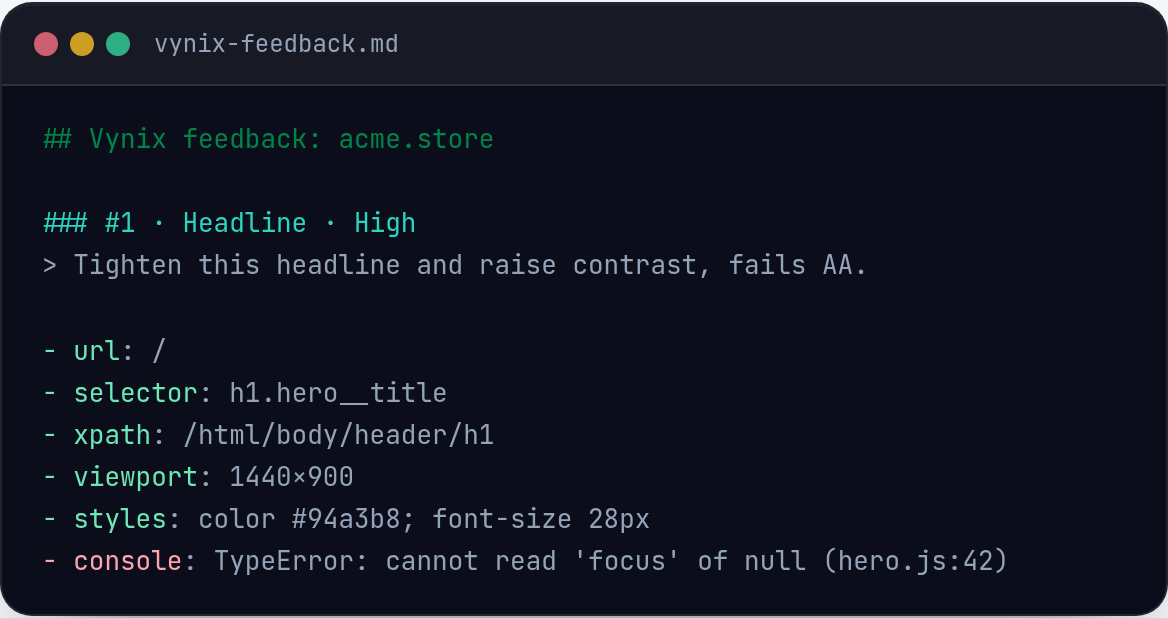
| Console and network context capture | Yes | Varies | Vynix captures browser debugging context automatically, while Linear usually depends on integrations or manual input. |
| AI root-cause diagnosis | Yes | Varies | Vynix includes diagnosis as part of the report. Linear AI capabilities may depend on plan and connected tools. |
| Handoff to GitHub or a coding agent | Yes | Partial | Vynix is designed for prompt and agent handoff. Linear can integrate with developer tools, depending on setup. |
| Review rounds for website fixes | Yes | Partial | Vynix supports feedback review loops. Linear can track follow-up work through issues. |
| Projects, roles, and sharing | Yes | Yes | Both support team collaboration, though they are optimized for different workflows. |
Different starting points for fixing software issues
Linear is commonly used as the system of record for engineering work, including issues, projects, priorities, and team workflows. It fits teams that want a structured, fast place to plan and track software tasks.
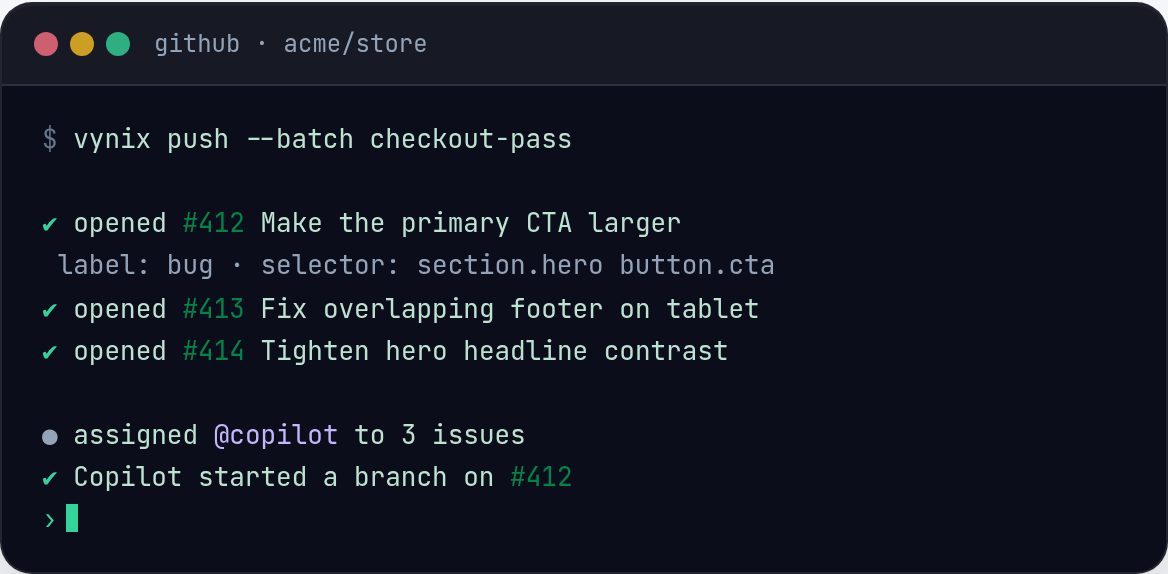
Vynix starts at the moment someone sees something wrong on a website. A user clicks the broken element, and Vynix captures the page context, screenshot, console and network details, and an AI diagnosis before the issue is handed to a developer or coding agent.
Context capture versus issue organization
The main difference is how much information is gathered before an issue is created. In a typical issue tracker, the reporter often has to describe the bug, attach screenshots, and add reproduction steps manually.
Vynix is designed to reduce that manual back-and-forth by collecting developer-facing context from the browser. Linear remains useful once work needs to be prioritized, assigned, tracked, and reported across a team.
AI and agent handoff
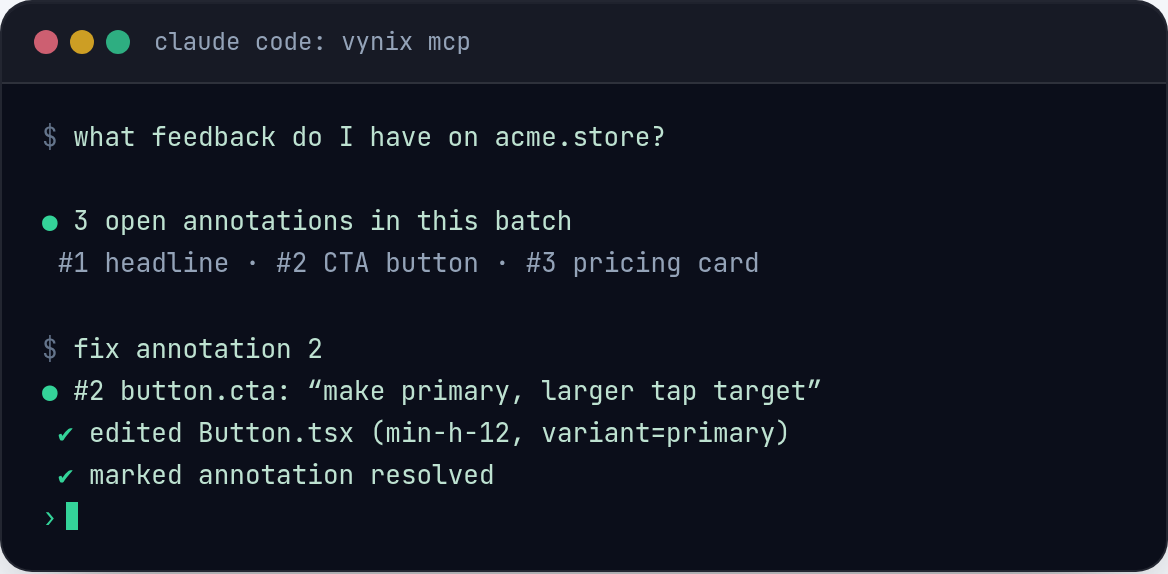
Vynix includes AI root-cause diagnosis and creates ready-to-build prompts that can be copied or used to open a GitHub issue and assign work to a coding agent. This makes it especially relevant for teams using AI-assisted development workflows.
Linear may connect with AI or automation tools depending on a team's setup and plan, but its core strength is still issue management and workflow coordination rather than browser-level debugging context.
How teams can use them together
For many teams, this is not an either-or decision. Vynix can capture precise website feedback and technical context, while Linear can remain the place where engineering work is prioritized and tracked.
The best fit depends on whether the team's biggest gap is collecting actionable bug context or managing the work after it has been defined.
When Linear fits
Linear fits best when a software team needs a fast issue tracker for planning, prioritizing, assigning, and tracking engineering work.
When Vynix fits
Vynix fits best when a team needs website-specific annotation, automatic developer context, AI diagnosis, and a clean handoff to developers or coding agents.
Frequently asked questions
Is Linear the same type of tool as Vynix?
No. Linear is primarily an issue tracking and product development workflow tool, while Vynix is focused on website annotation, automatic bug context, AI diagnosis, and developer or agent handoff.
Can Vynix replace Linear?
It depends on the workflow. Vynix can help create more actionable website bug reports, but teams that need full issue tracking, planning, and prioritization may still use Linear or another tracker.
Can Linear and Vynix be used together?
Yes. A team can use Vynix to capture the bug and technical context, then use Linear or GitHub to manage the engineering work after the issue is ready to build.
Install Vynix on your site in a minute and capture your first report with full developer context.
Try Vynix freeThis comparison is maintained by the Vynix team and updated regularly. If something about Linear is inaccurate, email hello@vynix.in.