The best visual website feedback tools in 2026
Visual website feedback tools help teams turn vague comments like "this looks broken" into clear, contextual reports that designers, developers, and QA teams can act on. The best choice depends on whether you need simple client annotations, structured bug tracking, deeper technical context, or integrations with your existing workflow.
What to look for
- Easy on-page annotation for non-technical reviewers
- Useful capture data, such as screenshots, browser details, console logs, or network context
- Smooth handoff to issue trackers, project management tools, or developer workflows
- Permissions, collaboration, and project controls that fit your team
- Pricing that matches your volume of sites, users, and feedback
1. Vynix (our pick for context and AI handoff)
Best for: teams that want visual feedback with developer context and an AI diagnosis that hands work to a coding agent.
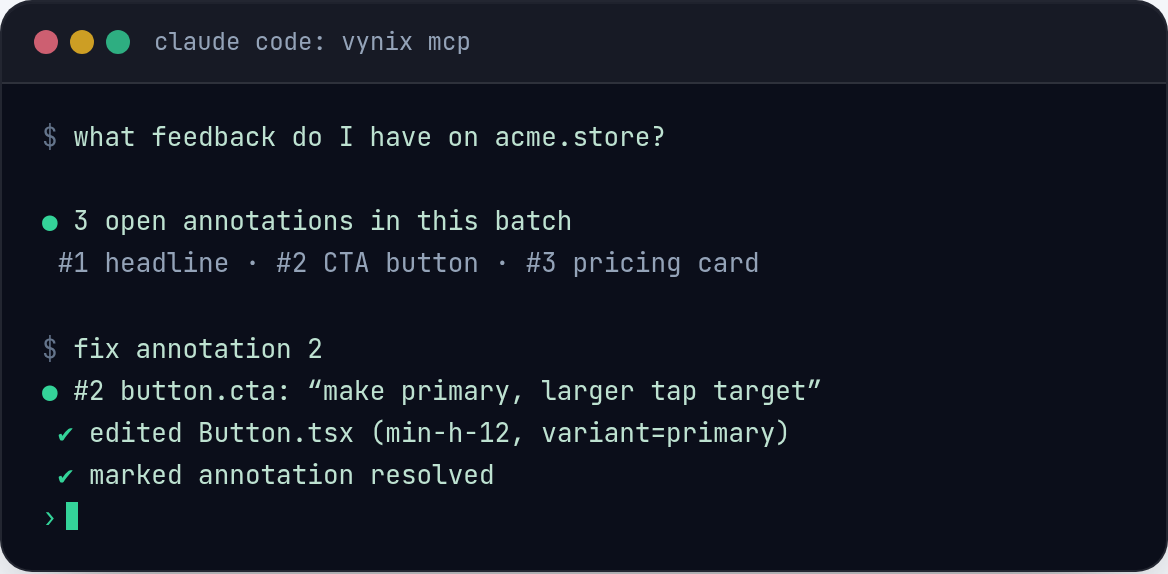
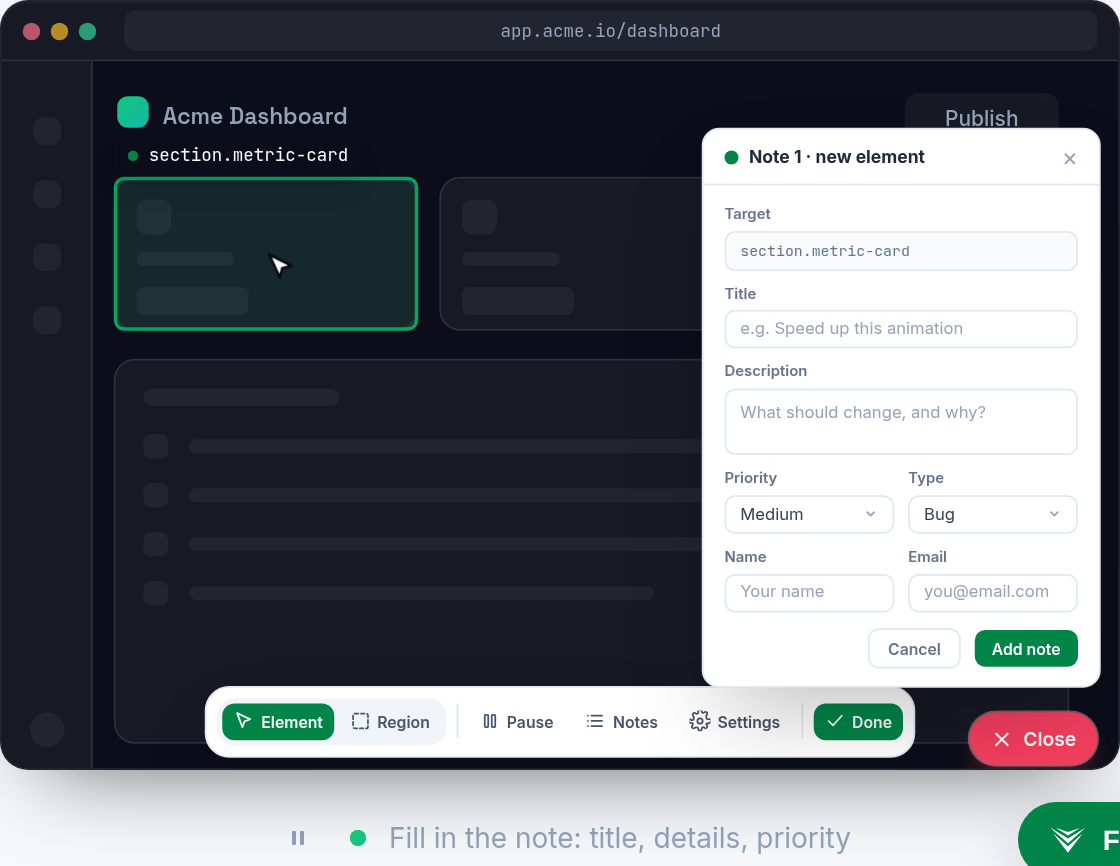
Vynix fits best when visual feedback needs to move quickly from a website issue to developer action. It combines click-based annotation with screenshot capture, element context, console and network context, and an AI diagnosis, then helps turn that into a build-ready prompt or GitHub issue for a coding agent.
2. Marker.io
Best for: visual website feedback that syncs to issue trackers.
Marker.io is known for visual website feedback that syncs to issue trackers.
3. BugHerd
Best for: point-and-click website feedback for agencies.
BugHerd is known for point-and-click website feedback for agencies.
4. Usersnap
Best for: feedback and bug capture with surveys.
Usersnap is known for feedback and bug capture with surveys.
5. Userback
Best for: visual feedback and bug tracking.
Userback is known for visual feedback and bug tracking.
Frequently asked questions
What is a visual website feedback tool?
A visual website feedback tool lets reviewers click on a live webpage and leave comments, screenshots, or bug reports tied to a specific element or location. This makes feedback easier to understand than long email threads or generic screenshots.
Who should use visual website feedback software?
These tools are useful for web agencies, product teams, QA teams, designers, developers, and clients who need to review websites or web apps. They are especially helpful when feedback comes from multiple stakeholders or needs to be turned into tracked development work.
How should I choose the best visual feedback tool?
Start with your workflow. If you mainly need client comments, prioritize ease of use and clean annotations. If you need bug fixing or QA, look for technical capture, integrations with issue trackers, and enough context for developers to reproduce and resolve problems.
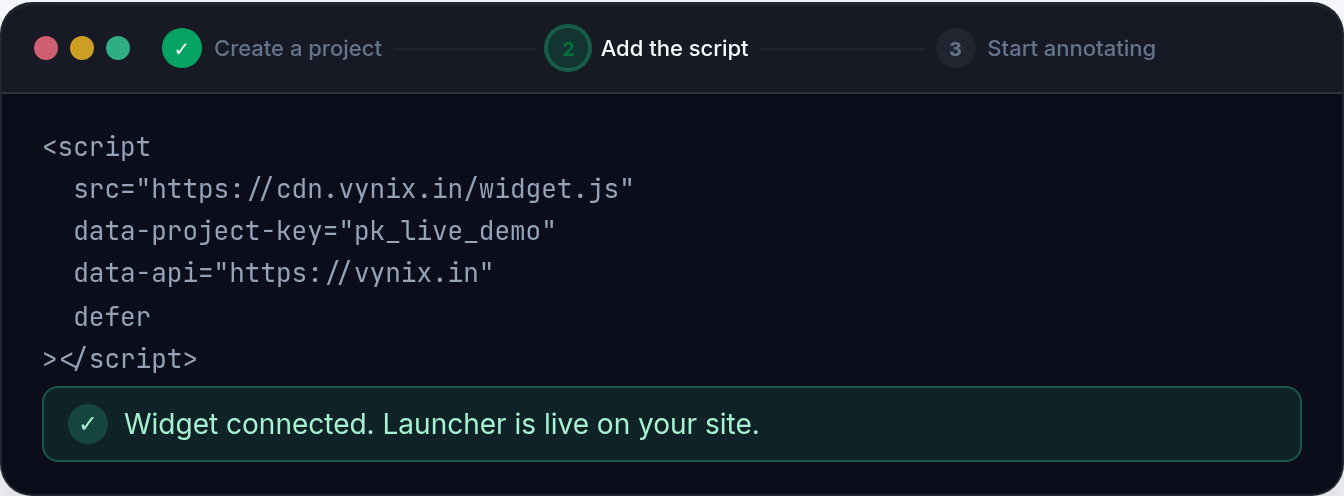
Install Vynix on your site and capture one real report with full context. You will see the difference in a minute.
Get started free